Security is an important part of running a successful business. Whether an organisation operates an office, warehouse, factory, construction site, residential estate or industrial facility, protecting its people, property and operations should be a management priority.
In commercial and industrial locations such as Warri, Otokutu, Ughelli and other parts of Delta State, businesses operate in different environments, each with its own security requirements. A business located along a busy commercial road may face different security concerns from a warehouse, a facility in a developing industrial area or a site with restricted access.
However, one common mistake organisations make is assuming that having security guards, CCTV cameras and perimeter fences automatically means their premises are secure.
Effective security begins with understanding risk, identifying vulnerabilities and putting the right protective measures in place.
This is where a professional security risk assessment becomes essential.
What Is a Security Risk Assessment?
A security risk assessment is a systematic examination of an organisation’s premises, operations, personnel, assets and existing security arrangements to identify potential threats and weaknesses.
The purpose is to understand what needs protection, what could threaten it, how vulnerable the organisation may be and what measures can reduce the identified risks.
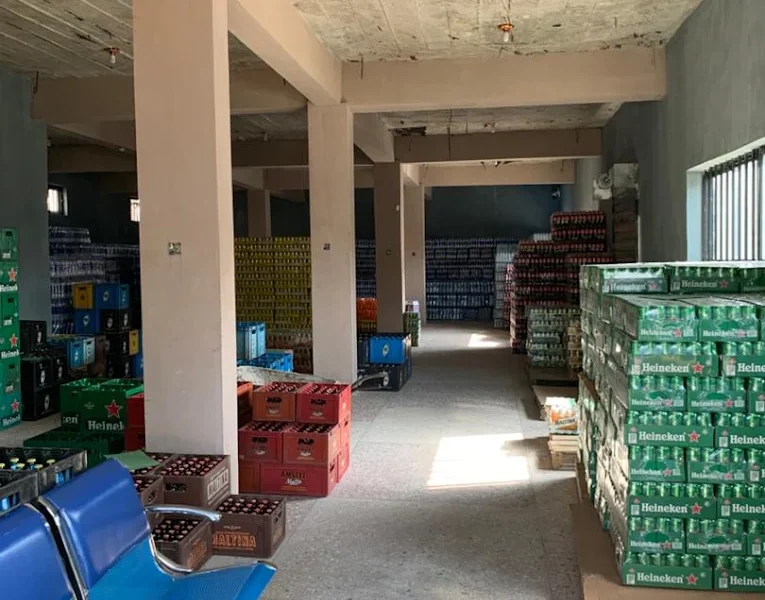
For example, a company operating a warehouse in Warri may need to assess its perimeter fencing, vehicle access points, loading areas, inventory storage, lighting, visitor procedures and security patrol arrangements.
An office in Otokutu, Delta State, may have different priorities, such as controlling visitor access, protecting confidential records, monitoring entry points and ensuring employees can respond appropriately during emergencies.
The assessment should therefore be based on the actual environment and operations of the organisation, rather than applying the same security arrangement to every facility.
1. Identify the Assets That Need Protection
The first step in developing an effective business security plan is identifying the organisation’s most important assets.
These may include:
- Employees, visitors and contractors.
- Buildings, offices and warehouses.
- Vehicles, machinery and industrial equipment.
- Raw materials, finished products and inventory.
- Company documents and confidential information.
- Computers, communication systems and other technology.
- Critical operational infrastructure.
Not every asset carries the same level of risk. A facility storing expensive equipment or valuable inventory may require more extensive protection than a general administrative office.
Businesses in Warri, Ughelli, Otokutu and other commercial areas of Delta State should identify their most valuable and operationally critical assets before deciding how security resources should be allocated.
2. Examine the Physical Security of the Premises
Physical security involves the measures used to prevent unauthorised access, theft, vandalism and other incidents involving people or property.
A proper assessment should examine the entire facility, including:
Perimeter protection: Are fences, walls, gates and other boundary controls adequate for the site?
Access points: Are entrances and exits properly controlled? Can unauthorised individuals enter without being detected?
Lighting: Are external areas, parking spaces, walkways and vulnerable sections adequately illuminated?
Surveillance: Are CCTV cameras positioned to monitor important areas? Are recordings accessible when needed?
Locks and barriers: Are doors, windows, gates and storage areas fitted with suitable security devices?
Security personnel: Are guards properly deployed, supervised and familiar with their responsibilities?
A business may have several security devices installed but still experience weaknesses because the equipment is poorly positioned, inadequately maintained or not supported by clear procedures.
3. Establish Proper Access Control and Visitor Management
Access control is one of the most important elements of facility security.
It determines who is permitted to enter a property, which areas they can access and under what conditions.
For businesses in Warri and across Delta State, visitor management should be treated as a formal security procedure rather than an informal activity handled at the entrance.
An effective visitor management process should include:
- Recording visitors’ names and contact details.
- Confirming the purpose of each visit.
- Identifying the employee or department being visited.
- Issuing visitor identification where appropriate.
- Restricting access to sensitive areas.
- Recording visitor entry and exit times.
- Ensuring contractors and external service providers are properly authorised.
For larger organisations, electronic access control systems, identification cards, biometric systems and access logs may provide additional accountability.
The objective is not to make access unnecessarily difficult. It is to ensure that people entering a facility are authorised and that their movement is appropriately controlled.
4. Assess Employee and Internal Security Risks
Security threats do not always originate outside an organisation. Internal weaknesses can also expose businesses to theft, fraud, information leaks, unauthorised access and operational disruption.
Employees, contractors and temporary workers may have legitimate access to certain parts of a facility, but that does not mean everyone should have unrestricted access to every department or asset.
Organisations should establish clear responsibilities, conduct appropriate personnel screening in accordance with applicable laws, maintain access records and review permissions regularly.
Security awareness training is equally important. Employees should understand how to report suspicious activities, protect company property, handle visitors and respond to emergencies.
A strong security culture develops when everyone understands that protecting the workplace is a shared responsibility.
5. Develop an Emergency Response Plan
Even with preventive security measures, organisations must prepare for incidents that may occur.
An emergency response plan establishes what employees, security personnel and management should do when an incident happens.
Depending on the organisation’s operations and risk profile, emergency scenarios may include:
- Unauthorised entry or attempted burglary.
- Theft or vandalism.
- Fire outbreaks.
- Medical emergencies.
- Workplace violence or threats.
- Civil disturbances affecting business operations.
- Suspicious packages or security alerts.
The plan should identify emergency contacts, reporting procedures, evacuation arrangements, designated responsibilities and communication channels.
Businesses operating in Warri, Otokutu, Ughelli and other parts of the Niger Delta should ensure that their emergency procedures reflect their actual location, available emergency services and operational environment.
A plan that exists only on paper is insufficient. Staff and security personnel should understand their responsibilities, and emergency procedures should be reviewed and practised periodically.
6. Combine Security Personnel with Appropriate Technology
Modern facility protection increasingly depends on combining trained security personnel with suitable technology.
Security guards provide observation, access control, patrols, communication and incident response. Technology can improve monitoring, record activities and support faster detection.
Depending on the facility, useful security technologies may include:
- Closed-circuit television (CCTV).
- Biometric access control.
- Electronic visitor management systems.
- Intrusion detection and alarm systems.
- Perimeter lighting and motion sensors.
- Two-way radio communication.
- Backup power for essential security equipment.
However, technology should be selected based on the security needs of the facility.
Installing CCTV cameras without a monitoring procedure, for example, does not guarantee effective surveillance. Similarly, biometric access control is only useful when access permissions are properly managed and former employees or unauthorised users are promptly removed.
The goal is to create an integrated security system in which people, equipment and procedures work together.
7. Review and Improve Security Regularly
Security is not a one-time project. Business operations change, employees leave, facilities expand and new risks emerge.
A security arrangement that was suitable when a company first opened may no longer be adequate after it introduces new equipment, increases its workforce, expands its warehouse or changes its operating hours.
Organisations should therefore conduct periodic security reviews to evaluate:
- Whether existing security measures are still effective.
- Whether security personnel are properly deployed.
- Whether CCTV and access control systems are working.
- Whether previous incidents have been properly addressed.
- Whether emergency contacts and response procedures are current.
- Whether new operational activities have introduced additional risks.
Regular reviews help management identify weaknesses before they become serious operational problems.
Why Professional Security Planning Matters in Delta State
Businesses operating in Delta State work across different commercial, residential, industrial and project environments. Locations such as Warri, Otokutu, Ughelli, Effurun and Sapele have different facility layouts, operational demands and security considerations.
For organisations operating in the wider Niger Delta, security planning may also need to account for remote project locations, transportation activities, contractor movement, valuable equipment and the protection of critical infrastructure.
This is why security decisions should not be based solely on the number of guards deployed or the amount spent on security equipment.
A well-planned security programme begins with a clear understanding of the organisation’s risks and the level of protection required.
Professional security risk assessment, security consultancy, facility protection, access control planning and emergency preparedness can help organisations make informed decisions about protecting their operations.
Conclusion
Effective business security is about more than placing guards at entrances or installing surveillance cameras. It requires a structured approach that considers people, assets, premises, technology, procedures and emergency preparedness.
For businesses in Warri, Otokutu, Ughelli and across Delta State, a professional security risk assessment can provide a clearer understanding of existing vulnerabilities and the practical steps required to improve protection.
Ultimately, the best security strategy is one that is planned around the organisation’s actual risks, regularly reviewed and properly implemented.
Security should not begin after an incident. It should begin with preparation.